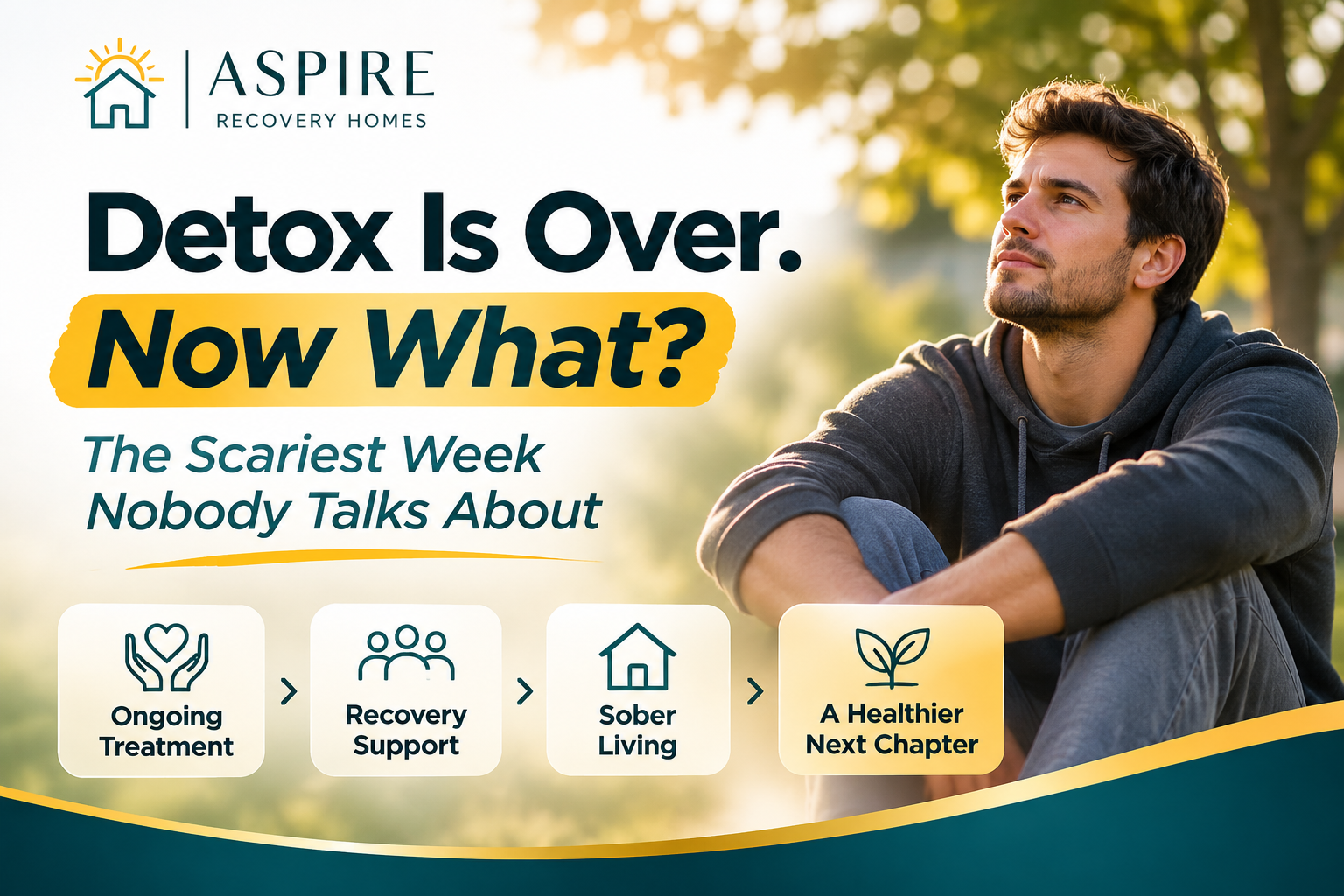
Detox Is Over. Now What? The Scariest Week Nobody Talks About
You made it through detox.
You got through the difficult nights, the uncomfortable symptoms, the uncertainty, and the moments when you wondered whether you could keep going. Perhaps your family was waiting for you to come home. Perhaps you were counting the days until you could finally feel better.
And then detox ended.
Everyone celebrates. They tell you that the hardest part is behind you. They say you should be proud of yourself. And you should be.
But when the appointments end, the schedule changes, and you begin thinking about what comes next, a different kind of fear can appear.
What happens now? Where do I go? How do I stay away from the people and situations associated with my addiction? What if I feel lonely? What if I am not ready to return home?
These questions are real.
What happens after detox is one of the most important questions in the recovery journey, yet many people feel unprepared for the transition.
Detoxification can help someone safely manage acute withdrawal and begin physical stabilization. But recovery involves much more than getting substances out of the body.
It involves rebuilding routines, addressing emotional challenges, receiving appropriate treatment, developing healthier relationships, and creating an environment that supports a different way of living.
At Aspire Recovery Homes in Houston, Texas, we believe that the transition after detox deserves thoughtful planning, structure, and support.
Because completing detox is not the end of the journey.
It can be the beginning of a new one.
1. What Happens After Detox? Understanding the Next Stage of Recovery
After detox, the next step should be based on an individual's medical condition, substance use history, mental health needs, recovery goals, and living situation.
Some people transition into residential addiction treatment. Others may continue with partial hospitalization programs (PHP), intensive outpatient programs (IOP), standard outpatient treatment, or another appropriate level of care.
For some individuals, recovery housing can provide an additional layer of stability while they continue treatment or aftercare.
The important thing is understanding that detox and ongoing recovery serve different purposes.
What does detox actually accomplish?
Detoxification is the process of managing withdrawal as the body adjusts to the absence of alcohol or other substances.
Depending on the substance and the person's medical condition, withdrawal can involve physical and psychological symptoms that require medical supervision.
Detox services may include:
Medical assessment and monitoring.
Management of withdrawal symptoms.
Medication when clinically appropriate.
Support with hydration, nutrition, and physical stabilization.
Assessment of immediate medical and psychiatric needs.
Planning for ongoing treatment and recovery support.
However, detox does not automatically address every factor associated with addiction.
Emotional triggers, behavioral patterns, relationship challenges, mental health concerns, and environmental influences may still need attention.
That is why discharge planning matters.
Before leaving detox, individuals should understand their recommended next level of care and have a practical plan for continuing support.
2. Why the First Week After Detox Can Feel So Overwhelming
For many people, the first few days after detox involve a major change in routine.
During detox, the individual may have been surrounded by medical professionals, structured schedules, and continuous support.
After discharge, the environment can change almost immediately.
There may be fewer appointments. There may be more free time. Family members may expect things to return to normal. Friends may start calling again.
And suddenly, the person is expected to navigate everyday life while still adjusting to recovery.
This transition can feel overwhelming for several reasons.
1. The structure changes
During detox, someone else may have organized much of the day.
After discharge, the individual may need to begin rebuilding a routine that includes treatment, meals, rest, work, and recovery activities.
2. Emotions can become more noticeable
As acute withdrawal improves, people may still experience anxiety, low mood, sleep difficulties, irritability, stress, or emotional discomfort.
These experiences vary significantly depending on the individual and substance involved. Some symptoms require further medical or mental health assessment.
3. Familiar environments may bring back difficult memories
Returning to the same places, relationships, or routines associated with previous substance use can create challenges.
An individual may encounter familiar reminders before they have developed a strong support system or coping plan.
4. Expectations can feel too high
Families may be relieved that detox is complete and expect immediate changes.
But recovery takes time.
A person may be physically stabilized and still need ongoing treatment, emotional support, and practical help.
The first week should not be treated as a test of whether someone is strong enough to recover.
It should be treated as a period that deserves appropriate planning and support.
3. The Emotional Side of Life After Detox Nobody Should Ignore
One of the most misunderstood parts of early recovery is that feeling physically better does not necessarily mean feeling emotionally well.
Someone may finish detox and still feel uncertain about the future.
They may think about relationships that need repairing, responsibilities that have been neglected, or opportunities they feel they have lost.
There may also be guilt, shame, fear, or embarrassment.
Sometimes the most difficult thought is:
"What if I cannot maintain the changes I have started?"
These emotions do not mean someone has failed.
They are reasons to continue receiving appropriate support.
Loneliness
People sometimes need to distance themselves from old social circles or environments associated with substance use.
Even when that decision is necessary, it can create feelings of isolation.
Anxiety about the future
Someone may not know where they will live, whether they can return to work, or how they will rebuild family relationships.
Uncertainty can feel especially difficult when life has been unstable for a long time.
Difficulty trusting yourself
A person may have made promises before and struggled to keep them.
Rebuilding self-confidence can take consistent actions over time.
Fear of judgment
People may worry about how others will react to their past or their decision to seek help.
A supportive recovery environment should respect dignity and encourage honesty rather than shame.
Recovery is not about pretending that the past never happened.
It is about building a healthier future without allowing the past to define every decision.
4. Five Important Steps to Take After Detox
The period after detox should involve more than simply deciding where to sleep.
It should include practical arrangements that support safety and continuity of care.
Step 1: Follow the recommended treatment plan
Speak with the discharge team about the appropriate next level of care.
Depending on your needs, this may involve residential treatment, PHP, IOP, outpatient services, medication management, or mental health support.
Do not assume that detox alone is sufficient for your recovery needs.
Step 2: Arrange a safe and supportive living environment
Think carefully about where you will stay after discharge.
Does the environment support your recovery? Are there substances or situations that could create difficulties? Are the people around you supportive of your decision to make changes?
Some people benefit from a structured sober living residence instead of returning immediately to an environment associated with previous substance use.
Step 3: Build a predictable daily routine
A healthy routine can help bring stability back into everyday life.
Start with manageable activities:
Wake up at a consistent time.
Eat regular meals.
Attend scheduled treatment appointments.
Participate in appropriate recovery meetings.
Maintain personal responsibilities.
Prioritize sleep and rest.
Stay connected with supportive people.
Do not try to change everything at once.
Consistency is more useful than creating an unrealistic schedule.
Step 4: Create a recovery support network
Recovery should not depend on one person's willpower alone.
Identify people and services you can reach when things become difficult.
Your support network might include a treatment professional, recovery counselor, peer support group, sponsor, trusted family member, or other supportive individuals.
Know who to contact before a difficult situation arises.
Step 5: Make a plan for difficult moments
Discuss personal triggers and potential challenges with your treatment or recovery support team.
Create a plan for what to do when you experience cravings, emotional distress, or pressure to return to substance use.
Knowing your next step can make a difficult moment easier to navigate.
5. Why Returning to the Same Environment Can Be Challenging
Imagine leaving detox and going directly back to the exact environment where substance use had become part of everyday life.
The same neighborhood. The same people. The same daily pressures. The same rooms and routines.
Even when someone genuinely wants to change, their surroundings may bring back familiar associations.
That does not mean everyone must leave their home or family.
It means the living environment should be considered as part of the recovery plan.
Ask yourself:
Is my home free from substances?
Are the people around me supportive?
Can I maintain healthy routines here?
Are there boundaries I need to establish?
Do I have access to appropriate recovery support?
Is returning home immediately the safest and most suitable option for me?
For some individuals, returning home with strong family and professional support may be appropriate.
For others, a different environment may be a better option during the transition.
There is no single answer that works for everyone.
6. How Sober Living After Rehab Can Support the Transition
A structured sober living residence can offer an additional layer of support for individuals who are appropriate for recovery housing.
Sober living after rehab provides a substance-free place to live while residents practice recovery-related habits and manage everyday responsibilities.
It can be especially useful for people who need a more supportive environment but are ready to participate in work, education, outpatient treatment, recovery meetings, and daily household activities.
A well-managed sober living home may provide:
A structured environment
Clear routines and house expectations help residents organize their time and responsibilities.
Peer connection
Living with others who understand the challenges of recovery can reduce isolation and create opportunities for encouragement.
Accountability
Residents are expected to take responsibility for their behavior, commitments, and shared household environment.
A place to practice independence
Preparing meals, managing schedules, completing chores, and maintaining employment can help people rebuild confidence in everyday life.
Support alongside outside treatment
Residents can continue an appropriate clinical treatment or aftercare plan through external providers.
It is important to remember that sober living is housing, not detoxification or clinical treatment. Someone who needs medical care, supervised withdrawal management, or a higher level of treatment should receive those services before moving into a residence that is not equipped to provide them.
7. What Does a Healthy First Week After Detox Look Like?
There is no universal schedule for everyone leaving detox.
The right plan depends on clinical recommendations, personal needs, and the next level of care.
However, an example of a structured first week may look like this.
Day 1: Focus on a safe transition
Confirm discharge arrangements, medications, transportation, appointments, and the next living environment.
Follow the discharge instructions provided by the clinical team.
Day 2: Begin the new routine
Establish a realistic morning and evening schedule.
Prioritize meals, rest, and attendance at scheduled services.
Day 3: Reconnect with support
Check in with treatment professionals, recovery peers, or trusted individuals.
Avoid unnecessary isolation.
Day 4: Understand personal challenges
Discuss triggers, emotional concerns, and practical difficulties with appropriate support professionals.
Day 5: Start rebuilding responsibilities
Depending on your treatment plan and physical condition, begin managing manageable personal responsibilities.
There is no need to rush into every obligation.
Day 6: Strengthen healthy connections
Spend time with people and participate in activities that support your recovery goals.
Day 7: Review and adjust
Consider what is working, where you need help, and what adjustments should be made to your recovery plan.
This is an illustrative framework, not a clinical recommendation or a required seven-day schedule.
The most important point is to avoid treating the first week as something you must handle alone.
8. How Families Can Support Someone After Detox
Families often experience their own emotional journey during detox.
They may feel relieved, hopeful, exhausted, or afraid.
When their loved one finishes detox, they may want to celebrate and believe life will immediately return to normal.
But it is important to remember that the transition requires patience.
Here are a few ways families can help.
Encourage continuity of care.
Support the next recommended treatment or recovery step rather than assuming detox completes the process.
Avoid unrealistic expectations.
Do not expect every relationship, responsibility, or emotional challenge to be resolved immediately.
Create a supportive home environment.
Where appropriate, reduce exposure to substances and establish healthy boundaries.
Listen without judgment.
Give your loved one room to express concerns without making every conversation about their past.
Respect professional guidance.
Work with qualified treatment providers when making decisions about the next stage of care.
Take care of yourself, too.
Family members may benefit from their own support groups, counseling, or other resources.
You can support someone's recovery without taking complete responsibility for it.
9. Early Recovery Support: Why Nobody Should Have to Do It Alone
One of the most important things a person can learn after detox is that asking for support is not a sign of weakness.
It is a healthy decision.
Early recovery support can come from different places depending on an individual's needs.
It may include:
Ongoing addiction treatment.
Mental health services.
Peer recovery support.
Family involvement.
Recovery meetings.
Medication management when appropriate.
Supportive recovery housing.
Healthy social connections.
Different services serve different purposes.
A sober living residence may provide daily accountability and a supportive place to live, while clinical providers address medical, psychological, and treatment needs.
A strong recovery plan recognizes the importance of both appropriate care and a healthy everyday environment.
10. How Aspire Recovery Homes Supports the Next Chapter in Houston
At Aspire Recovery Homes in Houston, Texas, we understand that leaving treatment can bring excitement, uncertainty, and many questions.
Sometimes people have completed an important phase of care but are not yet ready to return to an unsupported living situation.
They may need a place where structure, accountability, and community are part of everyday life.
Aspire provides structured sober living for adults who are appropriate for a recovery residence.
Our living environment includes:
A substance-free residential setting.
Clear house expectations and curfew policies.
Random drug and alcohol testing according to house policies.
An on-site house manager.
Required recovery meeting participation.
Weekly house meetings.
Shared household responsibilities.
Opportunities to develop greater independence.
Residents can continue appropriate PHP, IOP, SOP, or aftercare arrangements through outside Houston-area treatment providers.
Aspire is not a detoxification center, medical facility, or clinical addiction treatment program.
Our role is to provide a supportive living environment where residents can practice recovery principles while continuing their individual care plans.
We believe that rebuilding a life happens through everyday experiences.
Getting up in the morning. Preparing breakfast. Attending appointments. Going to work. Connecting with supportive people. Taking responsibility for the home you share.
These may seem like small activities, but they can become meaningful steps toward a more stable future.
11. Detox Was a Beginning, Not the Finish Line
Completing detox is something to be proud of.
It represents an important step toward physical stabilization and a new direction.
But you do not have to pretend that everything is suddenly easy.
There may still be difficult days, unanswered questions, emotional challenges, and decisions that feel overwhelming.
That does not erase what you have already accomplished.
The next chapter is not about proving that you can do everything alone.
It is about finding the appropriate care, the right environment, and the support that helps you continue moving forward.
If you are asking yourself what happens after detox, start with one important decision: make a plan for what comes next.
You deserve more than simply getting through withdrawal.
You deserve the opportunity to rebuild a life filled with healthier relationships, meaningful routines, independence, and hope.
At Aspire Recovery Homes, we believe every new beginning deserves a supportive place to grow.
If you or someone you love is exploring structured sober living in Houston, Texas, contact Aspire Recovery Homes to learn about the living environment, expectations, and admission process.
Call or text: 713-766-1127
Aspire Recovery Homes — A Real Home. A Real Recovery.
Frequently Asked Questions
1. What happens after detox?
After detox, individuals should follow a discharge plan that identifies the appropriate next level of care. This may include residential addiction treatment, PHP, IOP, outpatient services, recovery support, or suitable recovery housing.
2. Is detox enough to overcome addiction?
Detox helps manage acute withdrawal and physical stabilization. It does not automatically address the behavioral, emotional, psychological, and environmental factors associated with addiction. Many people need ongoing treatment and recovery support.
3. Why can the first week after detox feel difficult?
The transition can involve changes in routine, living arrangements, social relationships, and access to support. Individuals may also continue experiencing emotional or physical symptoms that require follow-up care.
4. Can someone move into sober living immediately after detox?
It depends on the person's medical condition, clinical recommendations, and the admission requirements of the residence. Anyone who still needs medical monitoring or a higher level of treatment should receive that care first.
5. Is sober living the same as addiction treatment?
No. Sober living provides recovery-supportive housing, structure, and accountability. It does not automatically provide detoxification, medical supervision, therapy, or clinical addiction treatment.
6. How can families help after detox?
Families can support treatment continuity, encourage healthy routines, help establish safe living arrangements, communicate without judgment, and work with appropriate professionals.
7. What is the role of a sober living home after rehab?
A sober living home can provide a substance-free residential environment where individuals practice healthy routines, develop responsibility, connect with peers, and continue their recovery plans.
8. Does Aspire Recovery Homes accept people after detox?
Admission depends on individual circumstances, medical stability, and the residence's criteria. Contact Aspire directly to discuss suitability, availability, and the admission process.
9. Can residents attend outpatient treatment while living in sober living?
Many sober living residents attend outside treatment services, including appropriate PHP, IOP, SOP, or aftercare programs. Specific arrangements should be discussed with the residence and treatment provider.
10. Where can I find structured sober living in Houston?
Aspire Recovery Homes offers structured sober living in Houston, Texas. Call or text 713-766-1127 to learn more about the home and its admission requirements.